Why .925 Silver Chains Are a Smart Everyday Choice
.925 silver chains are genuine sterling silver jewelry made with 92.5% silver and 7.5% strengthening metal, usually copper. This blend gives you the bright look of precious silver with far better durability than pure silver, which is too soft for everyday chains.
For the best long-term value, look for a solid-link chain, a secure clasp, and a clear 925 stamp or independent hallmark. Choose a thin chain for a light pendant or layering, and a wider, heavier chain when you want a stronger stand-alone look.
Sterling silver can tarnish, but that is a normal surface reaction, not proof of poor quality. With simple cleaning and dry storage, a well-made chain can stay wearable for years.
At Elizalde Jewelers, we believe in honest precious-metal jewelry: “crafted from real 10K, 14K, or 18K gold as described, never plated, never filled, and never imitation.” We do not carry 9ct products, and we bring that same focus on clear material details to helping you understand genuine sterling silver.
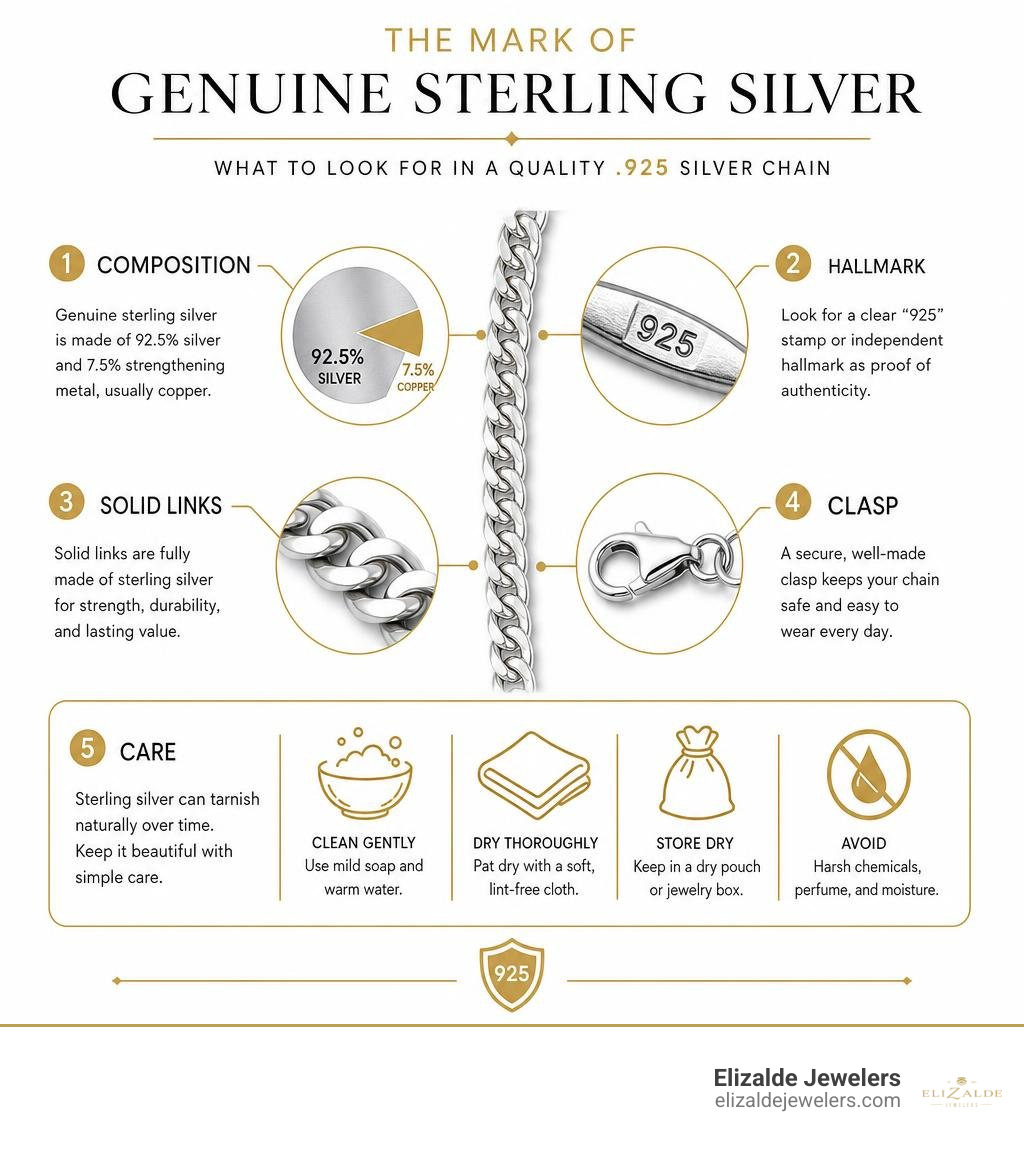
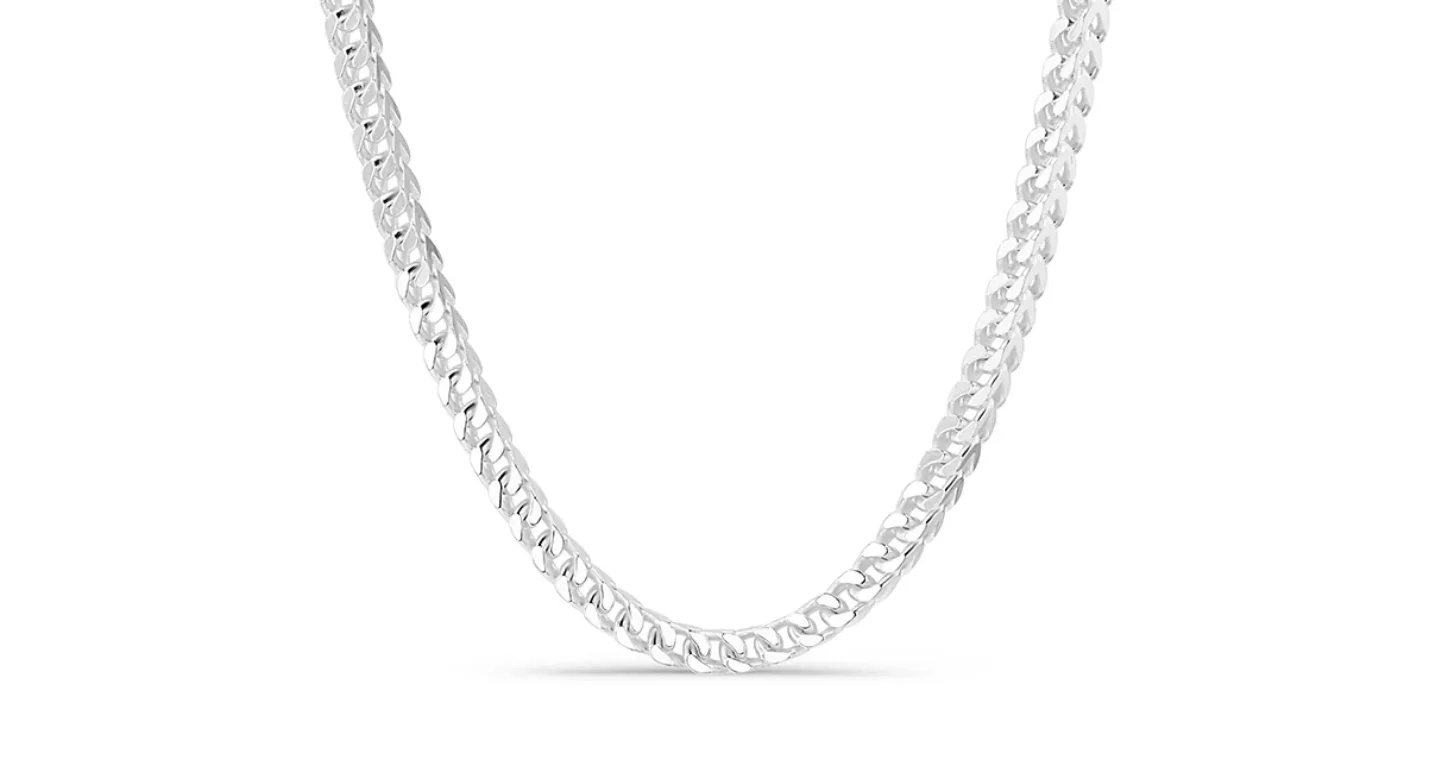
When shopping for jewelry, understanding what goes into your piece makes all the difference. Fine silver in its unalloyed state is 99.9% pure element, making it exceptionally lustrous but far too malleable to survive daily wear without stretching or snapping. Metallurgists solved this centuries ago by creating the sterling standard: 92.5% pure silver mixed with 7.5% alloy metals, almost exclusively copper.
This copper infusion acts as a structural stabilizer, giving the metal the mechanical hardness required to form delicate interlinking loops, intricate braids, and robust fasteners. The result is a piece of authentic silver jewelry that captures brilliant white light while resisting everyday tension.
Beyond aesthetics, genuine silver possesses real intrinsic worth tied directly to the precious metal spot market. While fashion alloys like base metals, brass, or mystery alloys carry zero secondary value, solid sterling retains baseline melt value based on total weight. A heavy piece acts as a tangible asset you can wear daily.
Silver purity is strictly regulated in many parts of the world. Under standards like the UK Hallmarking Act, any silver piece weighing over 7.78 grams must undergo independent testing at an official Assay Office before receiving an official hallmark. This strict assay standard protects buyers from under-carated metals and hollow plated imitations.
For everyday wearers, quality sterling silver is naturally skin-safe and nickel-free, making it an excellent hypoallergenic choice for sensitive skin when compared to cheap costume alloys.
| Property |
Fine Silver (999) |
Sterling Silver (.925) |
Plated / Base Metal |
| Silver Purity |
99.9% Pure Silver |
92.5% Pure Silver, 7.5% Copper |
0% to trace surface flash |
| Tensile Strength |
Very Low (bends easily) |
High (durable daily wear) |
Variable (brittle core) |
| Intrinsic Metal Value |
100% spot metal weight |
92.5% spot metal weight |
Negligible / None |
| Skin Compatibility |
Hypoallergenic |
Hypoallergenic (nickel-free) |
High risk of skin irritation |
| Longevity |
Deforms under tension |
Decades with proper care |
Peels, flakes, and wears away |
Solid vs. Hollow Construction in .925 Silver Chains
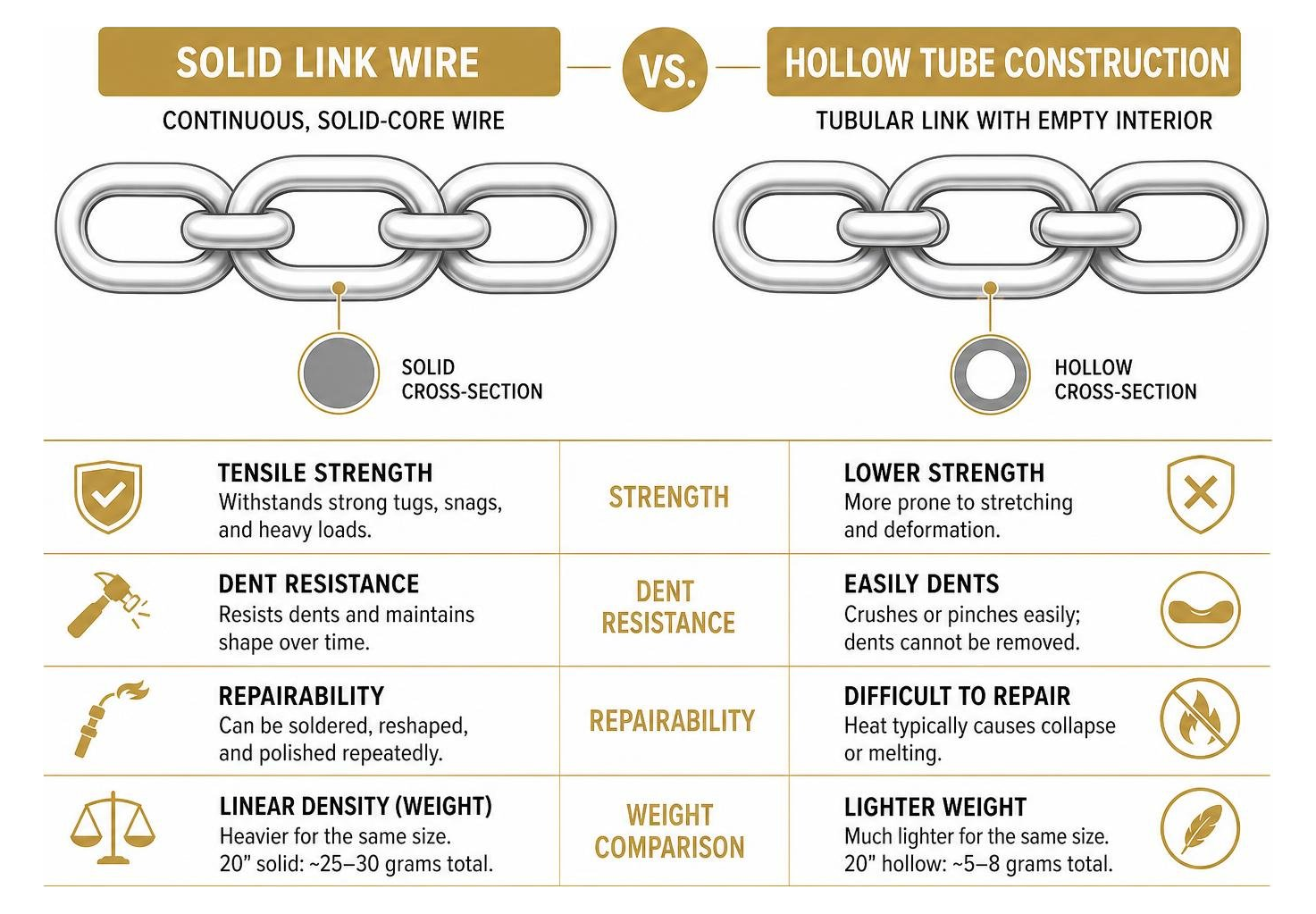
Construction method is the single biggest factor separating a chain built for decades from one that fails after a few months. When browsing durable solid chains, you are investing in links formed from continuous, solid-core precious metal wire.
Hollow chains, by contrast, use extruded tubes with empty interior cavities to mimic the outward volume of heavy jewelry at a fraction of the raw metal weight. While hollow pieces reduce manufacturing costs, they sacrifice structural integrity:
-
Tensile Strength: Solid links withstand strong tugs, accidental snags, and heavy pendant loads without stretching out of alignment.
-
Dent Resistance: Hollow tubing easily crushes or pinches when pressed against hard surfaces; once a hollow link dents, it cannot be popped back out.
-
Repairability: A master jeweler can solder, reshape, and polish a solid link an unlimited number of times over its lifespan. Hollow links generally melt or collapse under torch heat.
-
Linear Density: A quality 20-inch solid chain often weighs between 25 and 30 grams (a linear density of around 1.3 to 1.4 grams per inch), whereas a hollow version of the exact same dimensions may weigh as little as 5 to 8 grams.
Popular Weaves, Dimensions, and Mechanical Fasteners
The geometry of your chain determines how it drapes against the body, catches ambient lighting, and complements other pieces in your collection, such as a rugged stainless steel watch or a classic G-Shock. Exploring versatile silver chains reveals an array of timeless weaves:
-
Rope Chain: Twisting interlocking links create a spiral design with exceptional strength and multi-angle light refraction. A solid rope chain remains one of the most reliable styles for wearing alone or supporting statement pendants.
-
Curb Chain: Composed of uniform round or oval links designed to interlock and lie completely flat against the chest. A classic curb chain provides supreme comfort under shirt collars.
-
Figaro Chain: A stylized Italian pattern alternating several small circular links with an elongated oval link. The diamond-cut figaro chain features precision-beveled edges that flash brilliantly in sunlight.
-
Cable Chain: The foundational classic consisting of interconnected oval loops. A clean solid cable chain provides understated elegance that puts all the focus on your centerpiece pendant.
-
Miami Cuban Link: Round, closely spaced links with flat-machined faces that create a bold, uninterrupted ribbon of metal. Miami Cuban chains deliver high visual impact and exceptional linear weight.
-
Byzantine (King’s) Weave: An intricate, four-in-one link pattern that interlocks in alternating pairs, producing an ancient texture that drapes comfortably across the skin.
Choosing the Right Width, Weight, and Length
Selecting the ideal chain involves balancing physical proportions, desired neckline placement, and intended function:
-
Width & Gauge (1mm to 8.3mm): Ultra-slim 1mm to 2mm profiles work perfectly as discreet daily staples or as dainty chains for pendants. Mid-gauge widths (3mm to 5mm) balance solo presence with pendant versatility. Heavy gauges exceeding 6mm to 8mm command full visual attention as standalone statement pieces.
-
Standard Length Profiles:
-
16 to 18 inches (40–45 cm): Sits right at the collarbone or hollow of the neck for women, or as a snug choker fit on broad-shouldered men.
-
20 inches (50 cm): The universal sweet spot resting at the collarbone/upper sternum, easily worn inside or outside an unbuttoned shirt.
-
22 to 24 inches (55–60 cm): Drops to the mid-sternum, providing a laid-back drape that pairs well with heavy crosses, medallions, or layered shorter chains.
-
Load Capacity & Bail Clearance: Ensure the thickness of your chain passes cleanly through your pendant's bail. As a rule of thumb, your chain's weight should equal or exceed the pendant weight to prevent premature link thinning at the contact point.
Clasp Types and Secure Closures
A chain is only as dependable as its fastener. Because precious metals represent an investment, matching the right closure to your chain's weight profile is essential:
-
Lobster Clasp: Featuring an internal stainless-steel spring operated by a small external lever, the lobster clasp is the gold standard for daily security. Its solid casing resists outward pull forces, making it ideal for mid-weight and heavyweight chains.
-
Spring Ring Fastener: A circular, hollow-tube ring with an internal retracting wire spring. Lightweight and discreet, it is best suited for delicate chains between 1mm and 2mm where minimizing clasp weight prevents backward sliding.
-
Fish Hook & Trigger Clasps: Elegant closures featuring open-hook latches or heavy-duty trigger hinges engineered for quick one-handed fastening without sacrificing mechanical hold.
Essential Maintenance, Tarnish Prevention, and Daily Wear
A common misconception is that silver tarnishing indicates inferior alloy quality. In reality, tarnish is proof of authenticity. Pure silver naturally reacts with airborne sulfur compounds (such as hydrogen sulfide) to create a microscopic surface layer of silver sulfide ($Ag_2S$).
Unlike destructive iron rust, which flakes away and degrades base metal structural integrity, silver tarnish is strictly a surface patina that shields underlying metal and can be easily polished away.
To keep your chain shining bright:
-
Avoid Harsh Chemicals: Keep silver away from household bleach, swimming pool chlorine, and hot tubs. Chlorine causes rapid stress-corrosion cracking in precious metal alloys.
-
Apply Sprays First: Put on colognes, perfumes, hairsprays, and lotions before putting on your jewelry.
-
Wear It Regularly: Your skin’s natural oils actually help clean the metal and prevent ambient sulfur from settling onto the links.
Cleaning and Preserving .925 Silver Chains
Routine maintenance keeps your favorite new chain arrivals looking pristine for a lifetime.
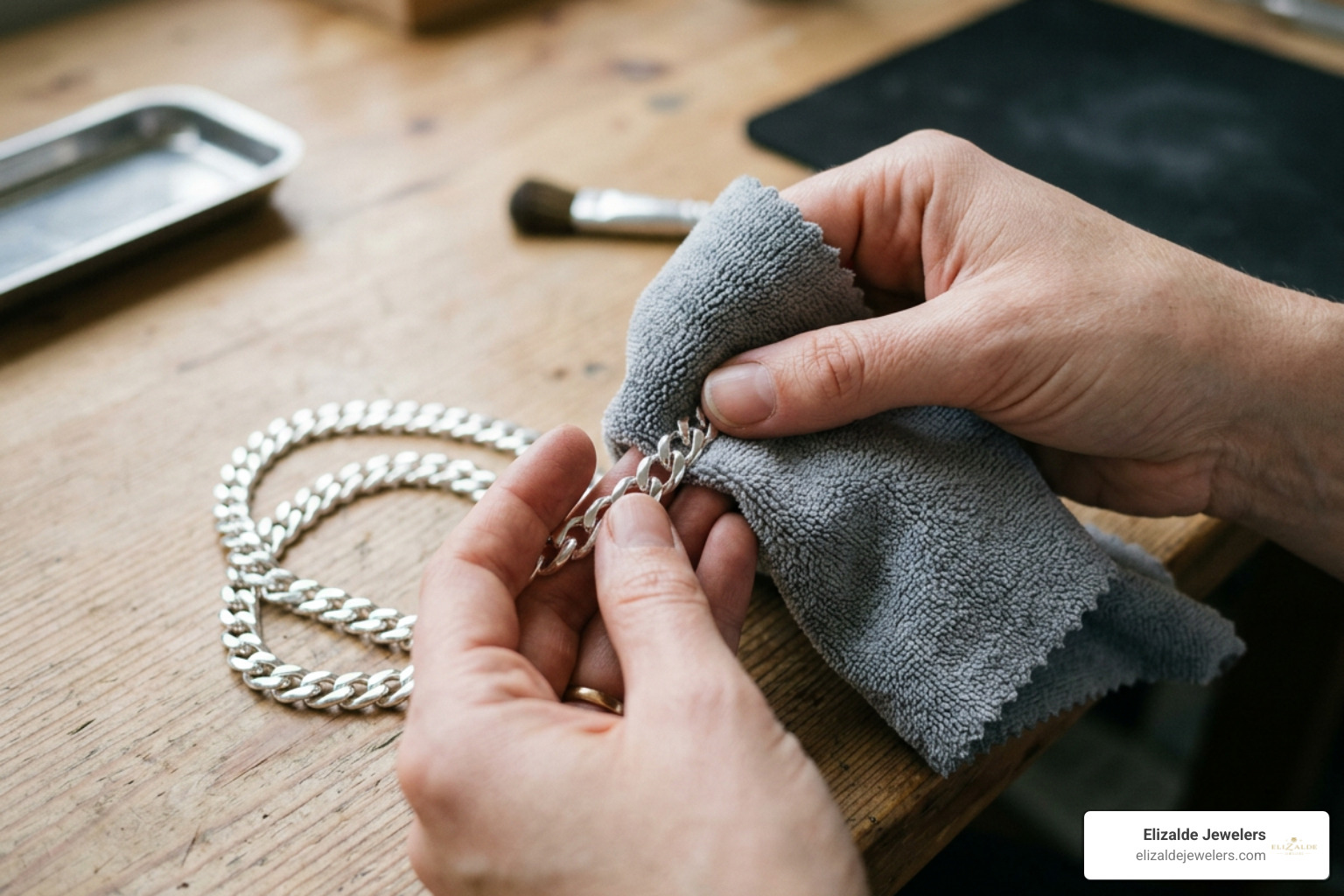
For light cleaning, use a dual-action microfiber jeweler's cloth. The inner treated white cloth lifts surface oxidation without scratching the metal, while the outer cloth buffs the piece to a bright mirror polish. For intricate link profiles like Byzantine or tight rope weaves, soak the piece in warm water with mild, phosphate-free dish soap, gently clean the crevices using an extra-soft toothbrush, rinse thoroughly with fresh water, and pat completely dry.
When you take your chain off, store it in an airtight zip-pouch or anti-tarnish cloth bag inside a low-humidity jewelry box to prevent air contact while resting.
Frequently Asked Questions About Sterling Silver Chains
Why does sterling silver tarnish over time, and is it permanent?
Tarnishing occurs when the silver content interacts with trace sulfur in the atmosphere to form a thin surface layer of silver sulfide. It is never permanent and does not compromise the structural core of the metal. Routine buffing with a specialized polishing cloth or gentle jewelry cleaner restores the original mirror luster in seconds.
Can I wear a solid sterling silver chain in the shower or swimming pool?
Occasional exposure to clean, fresh water during a quick shower is safe for solid sterling silver, provided soaps and hair products are rinsed off thoroughly. However, you should never wear silver in swimming pools, hot tubs, or natural hot springs. The concentrated chlorine and sulfur chemicals in treated water trigger rapid oxidation and can chemically etch the metal surface.
What is the difference between an independent hallmark and a simple 925 stamp?
A basic '925' stamp can be applied by any manufacturer during production without third-party oversight. An official hallmark represents a legally certified stamp struck by an accredited Assay Office after independent laboratory testing (such as non-destructive X-ray fluorescence). This third-party verification guarantees that the entire piece meets the exact legal purity threshold.
Conclusion
A solid sterling silver chain combines rich metallurgical history, authentic precious metal value, and exceptional everyday versatility. Whether you wear a subtle cable weave with your favorite pendant or make a bold statement with a heavy solid rope chain, investing in genuine craftsmanship guarantees a timeless piece you can enjoy for decades.
At Elizalde Jewelers, we take pride in delivering honest, heirloom-quality pieces crafted for genuine longevity. Take your personal style to the next level today—explore our collection of genuine chains to find the perfect addition to your jewelry wardrobe.



Why Solid Sterling Silver Chains Offer Serious Style on a Smart Budget
Why .925 Silver Chains Are a Smart Everyday Choice
.925 silver chains are genuine sterling silver jewelry made with 92.5% silver and 7.5% strengthening metal, usually copper. This blend gives you the bright look of precious silver with far better durability than pure silver, which is too soft for everyday chains.
For the best long-term value, look for a solid-link chain, a secure clasp, and a clear 925 stamp or independent hallmark. Choose a thin chain for a light pendant or layering, and a wider, heavier chain when you want a stronger stand-alone look.
Sterling silver can tarnish, but that is a normal surface reaction, not proof of poor quality. With simple cleaning and dry storage, a well-made chain can stay wearable for years.
At Elizalde Jewelers, we believe in honest precious-metal jewelry: “crafted from real 10K, 14K, or 18K gold as described, never plated, never filled, and never imitation.” We do not carry 9ct products, and we bring that same focus on clear material details to helping you understand genuine sterling silver.
The Metallurgy and True Value of .925 Silver Chains
When shopping for jewelry, understanding what goes into your piece makes all the difference. Fine silver in its unalloyed state is 99.9% pure element, making it exceptionally lustrous but far too malleable to survive daily wear without stretching or snapping. Metallurgists solved this centuries ago by creating the sterling standard: 92.5% pure silver mixed with 7.5% alloy metals, almost exclusively copper.
This copper infusion acts as a structural stabilizer, giving the metal the mechanical hardness required to form delicate interlinking loops, intricate braids, and robust fasteners. The result is a piece of authentic silver jewelry that captures brilliant white light while resisting everyday tension.
Beyond aesthetics, genuine silver possesses real intrinsic worth tied directly to the precious metal spot market. While fashion alloys like base metals, brass, or mystery alloys carry zero secondary value, solid sterling retains baseline melt value based on total weight. A heavy piece acts as a tangible asset you can wear daily.
Silver purity is strictly regulated in many parts of the world. Under standards like the UK Hallmarking Act, any silver piece weighing over 7.78 grams must undergo independent testing at an official Assay Office before receiving an official hallmark. This strict assay standard protects buyers from under-carated metals and hollow plated imitations.
For everyday wearers, quality sterling silver is naturally skin-safe and nickel-free, making it an excellent hypoallergenic choice for sensitive skin when compared to cheap costume alloys.
Solid vs. Hollow Construction in .925 Silver Chains
Construction method is the single biggest factor separating a chain built for decades from one that fails after a few months. When browsing durable solid chains, you are investing in links formed from continuous, solid-core precious metal wire.
Hollow chains, by contrast, use extruded tubes with empty interior cavities to mimic the outward volume of heavy jewelry at a fraction of the raw metal weight. While hollow pieces reduce manufacturing costs, they sacrifice structural integrity:
Popular Weaves, Dimensions, and Mechanical Fasteners
The geometry of your chain determines how it drapes against the body, catches ambient lighting, and complements other pieces in your collection, such as a rugged stainless steel watch or a classic G-Shock. Exploring versatile silver chains reveals an array of timeless weaves:
Choosing the Right Width, Weight, and Length
Selecting the ideal chain involves balancing physical proportions, desired neckline placement, and intended function:
Clasp Types and Secure Closures
A chain is only as dependable as its fastener. Because precious metals represent an investment, matching the right closure to your chain's weight profile is essential:
Essential Maintenance, Tarnish Prevention, and Daily Wear
A common misconception is that silver tarnishing indicates inferior alloy quality. In reality, tarnish is proof of authenticity. Pure silver naturally reacts with airborne sulfur compounds (such as hydrogen sulfide) to create a microscopic surface layer of silver sulfide ($Ag_2S$).
Unlike destructive iron rust, which flakes away and degrades base metal structural integrity, silver tarnish is strictly a surface patina that shields underlying metal and can be easily polished away.
To keep your chain shining bright:
Cleaning and Preserving .925 Silver Chains
Routine maintenance keeps your favorite new chain arrivals looking pristine for a lifetime.
For light cleaning, use a dual-action microfiber jeweler's cloth. The inner treated white cloth lifts surface oxidation without scratching the metal, while the outer cloth buffs the piece to a bright mirror polish. For intricate link profiles like Byzantine or tight rope weaves, soak the piece in warm water with mild, phosphate-free dish soap, gently clean the crevices using an extra-soft toothbrush, rinse thoroughly with fresh water, and pat completely dry.
When you take your chain off, store it in an airtight zip-pouch or anti-tarnish cloth bag inside a low-humidity jewelry box to prevent air contact while resting.
Frequently Asked Questions About Sterling Silver Chains
Why does sterling silver tarnish over time, and is it permanent?
Tarnishing occurs when the silver content interacts with trace sulfur in the atmosphere to form a thin surface layer of silver sulfide. It is never permanent and does not compromise the structural core of the metal. Routine buffing with a specialized polishing cloth or gentle jewelry cleaner restores the original mirror luster in seconds.
Can I wear a solid sterling silver chain in the shower or swimming pool?
Occasional exposure to clean, fresh water during a quick shower is safe for solid sterling silver, provided soaps and hair products are rinsed off thoroughly. However, you should never wear silver in swimming pools, hot tubs, or natural hot springs. The concentrated chlorine and sulfur chemicals in treated water trigger rapid oxidation and can chemically etch the metal surface.
What is the difference between an independent hallmark and a simple 925 stamp?
A basic '925' stamp can be applied by any manufacturer during production without third-party oversight. An official hallmark represents a legally certified stamp struck by an accredited Assay Office after independent laboratory testing (such as non-destructive X-ray fluorescence). This third-party verification guarantees that the entire piece meets the exact legal purity threshold.
Conclusion
A solid sterling silver chain combines rich metallurgical history, authentic precious metal value, and exceptional everyday versatility. Whether you wear a subtle cable weave with your favorite pendant or make a bold statement with a heavy solid rope chain, investing in genuine craftsmanship guarantees a timeless piece you can enjoy for decades.
At Elizalde Jewelers, we take pride in delivering honest, heirloom-quality pieces crafted for genuine longevity. Take your personal style to the next level today—explore our collection of genuine chains to find the perfect addition to your jewelry wardrobe.